Why Does Your Enduro Bike Deflect Off Rocks and Roots ?
ZK Suspension · Published:
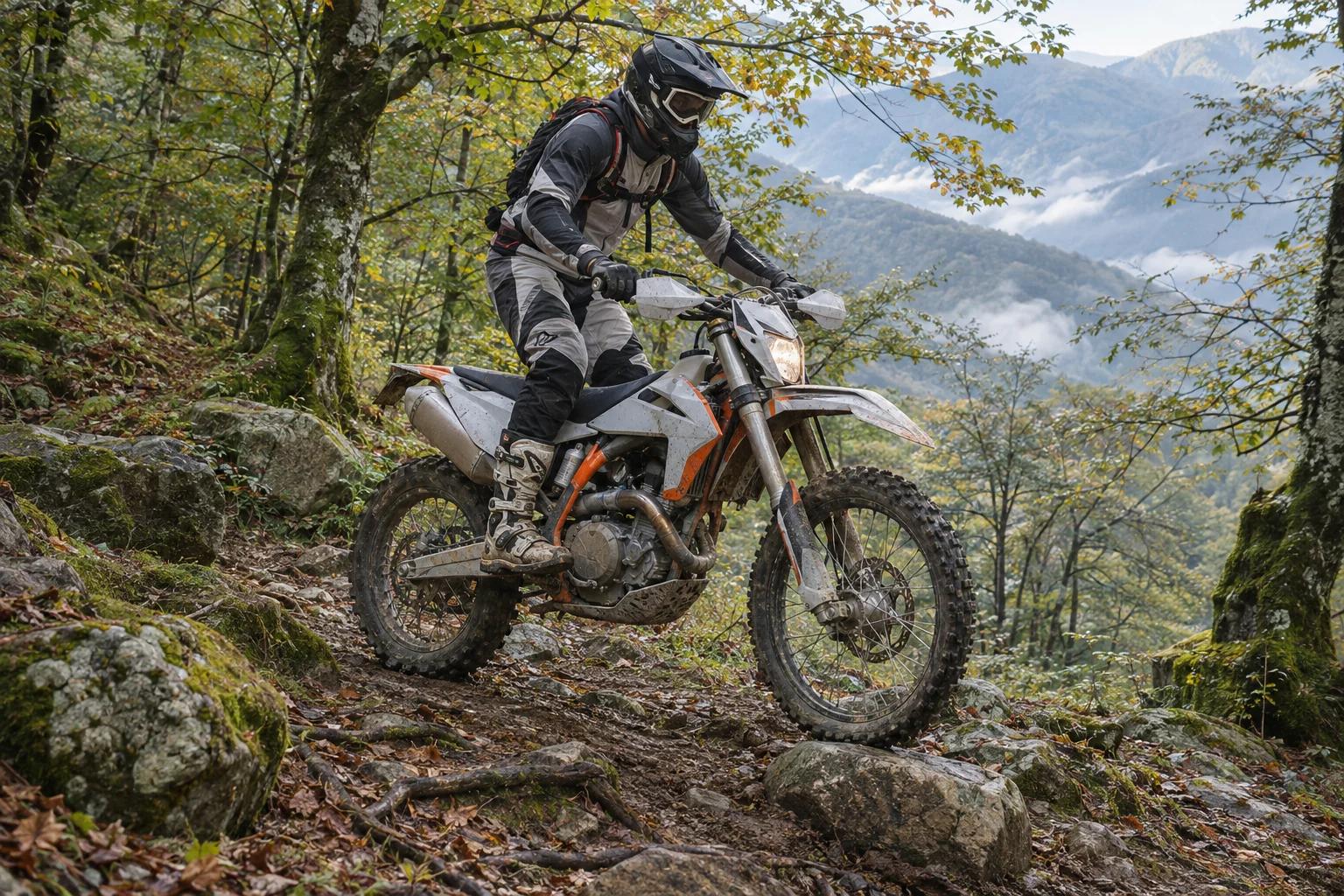
You touch a root on a rocky trail and the front wheel changes direction instead of holding its line. A few obstacles later, the rear starts kicking. It is tempting to decide that the suspension is simply too stiff.
It might be, but that is not a diagnosis. Damping settings, unsuitable springs, friction or a problem elsewhere on the bike can produce similar complaints. Before asking how many clicks to change, identify exactly when the bike becomes unsettled.
This guide is for enduro and hard enduro riding on rocks, roots and rough ground. It helps you prepare a useful inspection and conversation with a suspension specialist, rather than chase someone else's settings.
Describe the behaviour before changing anything
Record four details on your next assessment:
- Where do you feel it? Through the handlebars, the rear of the bike, or both?
- One impact or a sequence? Is the first rock uncomfortable, or does the bike get progressively harsher?
- Under what load? Braking, accelerating, climbing or descending?
- When did it start? After fitting the front wheel, changing a tyre, adjusting settings, or gradually over several rides?
“The front deflects while braking over repeated rocks” gives a technician more to work with than “the forks are bad”. A short video, recorded safely, may add context, although it cannot replace a physical inspection.
Check the rest of the bike first
Before touching the adjusters, check tyre condition, appropriate tyre use and pressure, wheel installation and any noticeable play. Follow the instructions for your actual tyre and system: tubes, mousse and other inserts do not share one universal setup.
If the problem appeared after removing the front wheel, have the installation checked against the model-specific procedure and torque specifications. Do not try to cure suspected fork binding by randomly loosening fasteners. Our guide to correct suspension and wheel installation explains why the installation deserves attention.
The bearings and linkage, where fitted, also belong in the investigation. Read about motorcycle linkage and swingarm bearings, especially if the change in behaviour has been gradual.
Compression and rebound do different jobs
Compression damping controls movement as the suspension compresses. Rebound damping controls its return afterwards. These basic roles are explained in Öhlins' motorcycle suspension adjustment guide.
A softer feeling is not automatically a better setup. The aim is to absorb uneven ground while retaining support and control. Opening every adjuster is not a reliable route to that balance.
When it gets harsher through a series of rocks
One possible explanation is a return that is too slow: the suspension does not extend sufficiently between successive impacts and remains further into its travel. This is commonly called packing, as described in FOX's rebound technical guide.
That observation alone does not prove you should reduce rebound damping. The overall configuration and condition still matter. Settings borrowed from another bike are not a diagnosis, even when its plastics and model name match yours.
When the rear kicks after an obstacle
Note whether the disturbance comes at contact, as the suspension returns, or when you apply the throttle. That distinction makes the report more useful. Body position, line choice and throttle control also contribute to what happens; adjusters cannot replace riding technique.
Check springs and sag before endless clicker changes
Spring selection needs to suit the bike and its load. When discussing a setup, provide your weight with boots, protection, hydration pack and normal luggage, rather than your body weight alone.
Check sag using the procedure and targets for your exact model and year. Numbers from a different model, a linkage bike rather than PDS, or motocross rather than enduro are not automatically transferable. Our suspension sag guide introduces the subject; obtain the actual targets from the manufacturer.
If the required sag cannot be achieved within the permitted preload range, discuss spring selection with a specialist. More preload or more damping is not a universal substitute for the right spring. See our re-spring service for this part of the setup process.
When adjustment is no longer enough
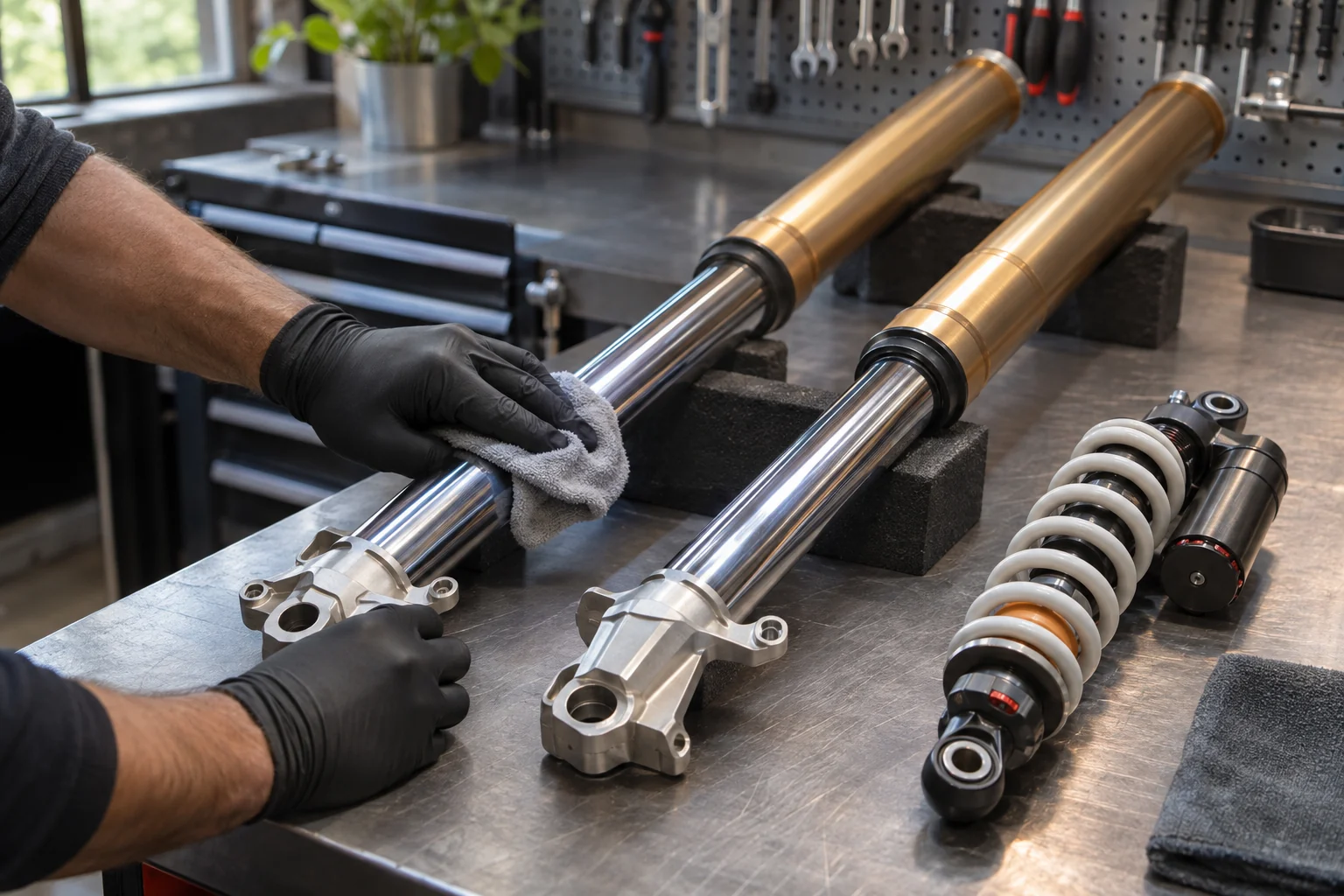
A useful reason to arrange an inspection is a clear change from the same bike's previously predictable behaviour under similar conditions. Record the last service, what was replaced and the approximate riding hours since then. Follow the maintenance schedule for the fitted components; one servicing interval cannot cover every enduro bike and competition use case.
If you find a leak, damaged tube, noticeable play or sudden instability, stop riding and arrange an inspection. Do not use clicker changes to mask a mechanical problem.
Depending on the findings, the next step may be fork inspection and servicing, rear shock servicing, or a setup correction. A custom re-valve is a separate decision after the condition, springs and baseline settings have been assessed. It is not the automatic answer to every harsh impact.
Prepare before an enduro race, not on the start line
Use practice time to confirm a familiar, serviceable configuration:
- Record the current settings using the method in your owner's manual.
- Use the riding equipment and load you intend to race with.
- Choose a short, familiar section on permitted terrain with predictable conditions.
- If the bike is mechanically sound and the manual permits adjustment, change one parameter at a time by a small amount within its specified range.
- Record the result. If handling deteriorates, return to the documented baseline and discuss it with a specialist.
Look for repeatable behaviour rather than the softest feel when pushing on a stationary bike. A brief log of “terrain — setting — observation” is more useful than five simultaneous changes.
Common questions
Can I use a friend's settings on the same model?
Treat them as a comparison, not a prescription. Springs, service history, equipped rider weight and riding style may differ. The documentation for your own components remains the starting point.
How many clicks should I change for rocks and roots?
Without the model, year, suspension type, current settings and a clear description of the problem, a precise number would be a guess. Gather those details and establish the baseline before looking for a magic click count.
Do I need to buy new suspension straight away?
Establish the cause first. Incorrect installation, overdue maintenance or an unsuitable baseline configuration does not necessarily mean replacing complete components.
Discuss your enduro suspension with ZK Suspension in Gabrovo
When you contact us, include the make, model and year, suspension type, equipped rider weight, hours since the last service and a short description of when the bike deflects or kicks. Tell us whether your priority is trail riding, hard enduro or racing.
Those details provide a useful starting point for discussing our suspension services. Work, parts and timing are agreed for the individual case. If you plan to send the components, read how requests and shipping work and wait for confirmation before shipping.
Contact ZK Suspension: z.kolev@zksuspension.com · +359 895 75 78 81.
Use the exact model-year manual for specifications and procedures. KTM owners can find theirs through the official manuals portal.